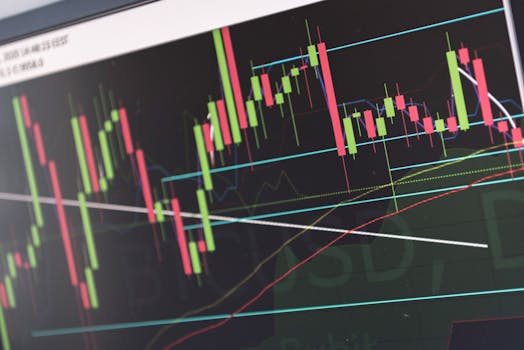
So, you’ve heard about the adrenaline rush, the quick profits, and maybe even the cautionary tales of day trading stocks. It sounds like a thrilling ride, doesn’t it? But before you strap yourself into the passenger seat and hit the gas, let’s talk about the engine and the steering wheel – the actual Stock day trading strategies that can keep you from spinning out. Many jump in with grand visions of Lamborghinis and early retirement, only to find themselves staring at red numbers and a rapidly depleting bank account. The truth is, successful day trading isn’t about luck; it’s about discipline, preparation, and a well-honed strategy. This isn’t a get-rich-quick scheme; it’s a profession, albeit one that can be done in your pajamas.
Are You Cut Out for the Day Trading Hustle? A Reality Check
Let’s be brutally honest: day trading isn’t for everyone. It requires a certain temperament, a thick skin, and a willingness to constantly learn and adapt. If you panic at the first sign of a dip or get giddy over every tiny uptick, you might want to reconsider. The market doesn’t care about your feelings. It moves based on news, sentiment, and algorithms, often with the subtlety of a herd of elephants. So, before diving headfirst into the choppy waters of intraday trading, ask yourself: can I handle the pressure? Am I disciplined enough to stick to a plan, even when my gut screams otherwise? If the answer is a resounding “maybe,” then let’s explore some of the foundational stock day trading strategies that can build that confidence.
The Unsung Heroes: Chart Patterns and Technical Analysis
Forget crystal balls and psychic predictions. The bedrock of most day trading strategies lies in technical analysis – the study of past market data, primarily price and volume, to forecast future price movements. Think of charts as a storyteller, and price action as the plot.
#### Decoding the Dance: Common Chart Formations
You don’t need a degree in astrophysics to understand basic chart patterns. These are recurring formations that suggest potential price movements.
Head and Shoulders (and Inverse Head and Shoulders): These patterns can signal trend reversals. A classic head and shoulders suggests a topping pattern (downtrend incoming), while its inverse counterpart signals a bottoming pattern (uptrend incoming). Mastering these can give you an edge.
Flags and Pennants: These are short-term continuation patterns, often appearing after a sharp price move. They look like a small flag or pennant on the chart and typically indicate that the existing trend is likely to resume. Think of them as a brief pit stop before the race continues.
Triangles (Ascending, Descending, Symmetrical): These patterns represent a period of consolidation where price ranges are narrowing. They can precede a breakout in either direction, but the specific type of triangle offers clues about the likely outcome.
#### The Power of Indicators: Your Trading Dashboard
Beyond chart patterns, technical indicators provide additional insights. These are mathematical calculations based on price and volume that help traders identify trends, momentum, and potential turning points. Some popular ones include:
Moving Averages (MAs): These smooth out price data to create a single, flowing line, making it easier to identify the direction of a trend. Crossovers between different moving averages (e.g., a shorter-term MA crossing above a longer-term MA) can be powerful buy or sell signals.
Relative Strength Index (RSI): This momentum oscillator measures the speed and change of price movements. It helps identify overbought or oversold conditions, suggesting potential reversals.
MACD (Moving Average Convergence Divergence): Another momentum indicator that shows the relationship between two moving averages of prices. It’s great for spotting trend changes and momentum shifts.
Remember, indicators are tools, not gospel. They work best when used in conjunction with other forms of analysis, not in isolation. Trying to rely on a single indicator is like trying to build a house with just a hammer.
The Art of Entry and Exit: When to Get In and Out (Without Tears)
Even the most brilliant strategy is useless if you don’t know when to enter a trade and, more importantly, when to exit. This is where risk management and profit targets come into play.
#### Setting Your Stop-Loss: Your Financial Safety Net
This is arguably the most crucial element of any day trading strategy. A stop-loss order automatically sells your position if the price moves against you by a predetermined amount. It’s your emergency parachute, designed to prevent catastrophic losses. Without a stop-loss, a single bad trade can wipe out days or weeks of gains. I’ve seen promising traders get wiped out because they refused to set a stop-loss, convinced the market would “turn around.” Spoiler alert: it often doesn’t, at least not in time.
#### Defining Your Profit Target: Knowing When to Take Your Winnings
Just as important as limiting losses is knowing when to lock in profits. Don’t be greedy! Set a realistic profit target based on your analysis and the volatility of the stock. Once your target is hit, exit the trade. It’s far better to have a smaller, guaranteed profit than to hold on too long and watch it evaporate.
Exploring Popular Day Trading Approaches
While the underlying principles remain constant, various stock day trading strategies cater to different trading styles and market conditions.
#### Scalping: The Quick Hitters
Scalpers aim to make many small profits from small price changes throughout the day. They might hold a position for mere seconds or minutes. This requires extreme focus, lightning-fast execution, and a keen eye for order flow. It’s like being a sprinter in the trading world – quick bursts of action.
#### Momentum Trading: Riding the Wave
Momentum traders jump on stocks that are already moving strongly in a particular direction. They look for stocks with high volume and clear upward or downward trends, aiming to capture the bulk of a price move before it reverses. This strategy thrives on identifying and exploiting trends.
#### Range Trading: Playing the Bounds
Range traders identify stocks that are trading within a defined price channel (a support level below and a resistance level above). They buy near support and sell near resistance, betting that the stock will bounce between these levels. This works best in less volatile, sideways markets.
The Unseen Factor: Psychology and Discipline
If technicals are the engine and strategy is the chassis, then psychology is the fuel and the driver. Your mindset can make or break your trading career.
#### Taming the Emotional Beast
Fear and greed are the twin assassins of trading profits. Fear can cause you to exit trades too early or avoid taking potentially good setups. Greed can lead you to hold onto losing trades too long or over-leverage your positions. Developing emotional control is paramount. This often involves:
Sticking to your trading plan: This is your written rulebook. Follow it religiously.
Avoiding revenge trading: If you just had a losing trade, don’t immediately jump back in to “make it back.” Take a break, reassess, and wait for a clear setup.
* Accepting losses as part of the game: No trader wins 100% of their trades. The goal is to make more on your winning trades than you lose on your losing ones.
#### Continuous Learning and Adaptation
The market is a constantly evolving entity. What worked yesterday might not work tomorrow. Successful day traders are lifelong learners. They continuously refine their stock day trading strategies, study market behavior, and adapt to new information and conditions. Never become complacent.
Wrapping Up: Your Next Steps in Mastering Trading Strategies
So, there you have it – a peek behind the curtain of effective stock day trading strategies. It’s not about chasing the latest hot tip or hoping for a miracle. It’s about understanding the market, employing sound technical analysis, executing with discipline, and most importantly, managing your risk. These strategies are your tools, but your discipline and mindset are what will truly determine your success.
Now, the real question is: are you ready to put in the work and build a trading strategy that truly reflects your dedication?